Case study
From 71 to 93: how we fixed our own AI visibility score
We built Visus to score how well a website supports AI visibility — whether assistants like ChatGPT, Perplexity, and Google AI can understand, mention, and cite your business. Then we ran the same free AI visibility audit on our own homepage, getvisus.com.
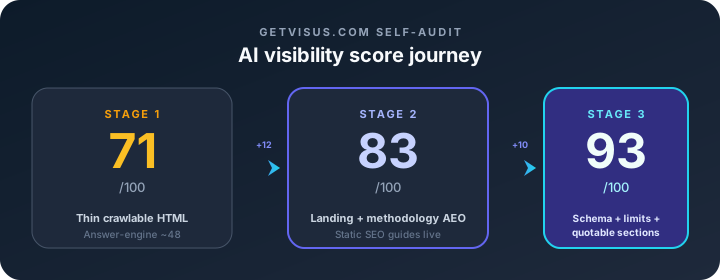
The first pass scored 71/100. After two deliberate rounds of on-page work, the same URL scored 83, then 93. Same tool, same rubric, same URL (apex, not www). This post shows what we changed at each stage, which fix cards disappeared from the report, and the search phrases we want this article to earn — because in a young category like generative engine optimisation (GEO), keywords often lag behind the problem language people actually use.
What the AI visibility score measures
Visus reports an on-page readiness score from 0–100. It aggregates signals such as entity clarity (title, meta, schema), structural signals (headings, JSON-LD), compressibility (answer-first copy a model can quote), and corroboration (trust pointers and external consistency).
That is related to — but not the same as — ChatGPT visibility in live answers. A high score means your page is doing its job. Monthly AI citation tracking on Pro is a separate sampled check.
At 60+ the verdict reads AI-READY: “signals are sufficient for AI discovery and citation.” Below 40, the gaps are structural. We started at 71 — “developing” territory with clear upside.
Stage 1: 71/100 — the baseline
At 71, the headline score was acceptable for an early SaaS homepage, but sub-scores told a sharper story:
- Answer engine readiness was the weak band (roughly high 40s) — the page was not easy to quote.
- Citation-related signals on the HTML could look strong even while product Track batches failed in production (API limits — a separate ops issue).
- Most marketing copy lived in React after JavaScript. Server-side URL audits only saw a thin HTML shell unless we enriched extraction.
The report still asked us to fix three things first — the same cards many customers see:
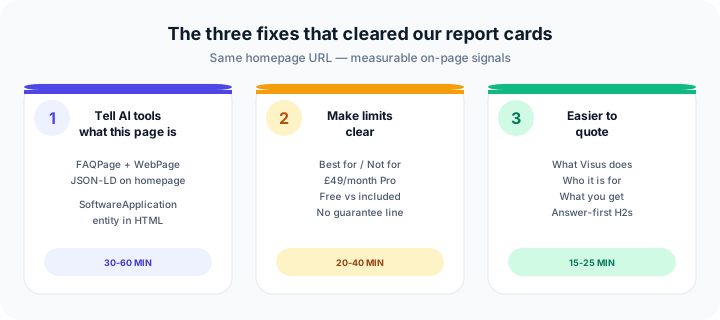
- Tell AI tools what this page is (schema + entity in crawlable HTML)
- Make important limits clear (pricing, best for / not for, guarantees)
- Make the page easier to quote (short H2 sections: what we do, who it is for, what you get)
Stage 2: 83/100 — first wave of product and AEO work
The jump to 83 came from shipping broader product and marketing improvements:
- Expanded landing and methodology copy about what Visus does, free vs Pro, and how scoring works.
- Detection of help and use-case signals in the audit pipeline.
- Clearer Fix / Test / Track report workspace and plain-English fix cards.
- Static SEO guide pages (for example AI visibility audit and AI SEO audit) for long-tail discovery.
Progress — but the same three “fix first” cards still appeared. Score up; trust gap not fully closed. We were still asking users to believe a number while our homepage did not yet practise everything we preach.
Stage 3: 93/100 — fixes that matched our own fix cards
The move to 93 was specifically about making getvisus.com crawlable and quotable the way we tell customers to:
1. Tell AI tools what this page is
- Added FAQPage and WebPage JSON-LD alongside existing SoftwareApplication and Organization schema.
- Centralised public facts in
visusPublicFactsso React and static HTML stay aligned. - Expanded static fallback and noscript content inside
index.htmlfor non-JS crawlers.
2. Make important limits clear
- Published a visible Pricing and limits block: best for, not for, £29/month Visibility Monitor, what is included, and an explicit no guarantee line.
- Matched the language on Upgrade and our methodology page so facts do not contradict each other.
3. Make the page easier to quote
- Added answer-first H2 sections: What Visus does, Who it is for, What you get.
- Updated the extract pipeline: when Readability sees fewer than 500 words, merge static + noscript text so URL audits match deployed copy.
| Score | What moved |
|---|---|
| 71 | Baseline self-audit; thin crawlable body; answer-engine band weak |
| 83 | Landing/methodology AEO, static guides, product UX — score up, same three cards |
| 93 | Schema + limits + quotable sections in HTML; extract enrichment; cards cleared |
Keywords and search phrases this article supports
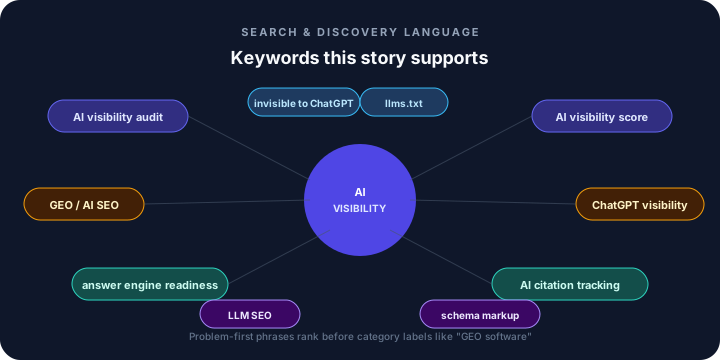
In GEO and AI SEO, many buyers search problems before they search tool categories. We wrote this post to reinforce both — natural language in the story, and explicit phrases for search engines and assistants.
What we did not claim
- We do not guarantee that ChatGPT, Claude, Gemini, or Perplexity will recommend Visus.
- A 93 is not “perfect” — it is strong on-page readiness for one URL at one point in time.
- Live citation monitoring still depends on API health and configured providers — product ops, not HTML alone.
What you can copy for your site
- Run a baseline audit on your homepage (apex URL, stable canonical).
- Fix the top three cards in plain English before chasing minor tweaks.
- Put pricing and limits in crawlable HTML, not only in a client-rendered widget.
- Add answer-first H2s a teenager could quote in one sentence each.
- Re-audit after deploy — scores move when extraction sees the new source.
Check your AI visibility score
Free audit in about 60 seconds. See your score, fix cards, and what to change first — no credit card.
Run free auditFind GetVisus useful? Make us a preferred source in Google: